
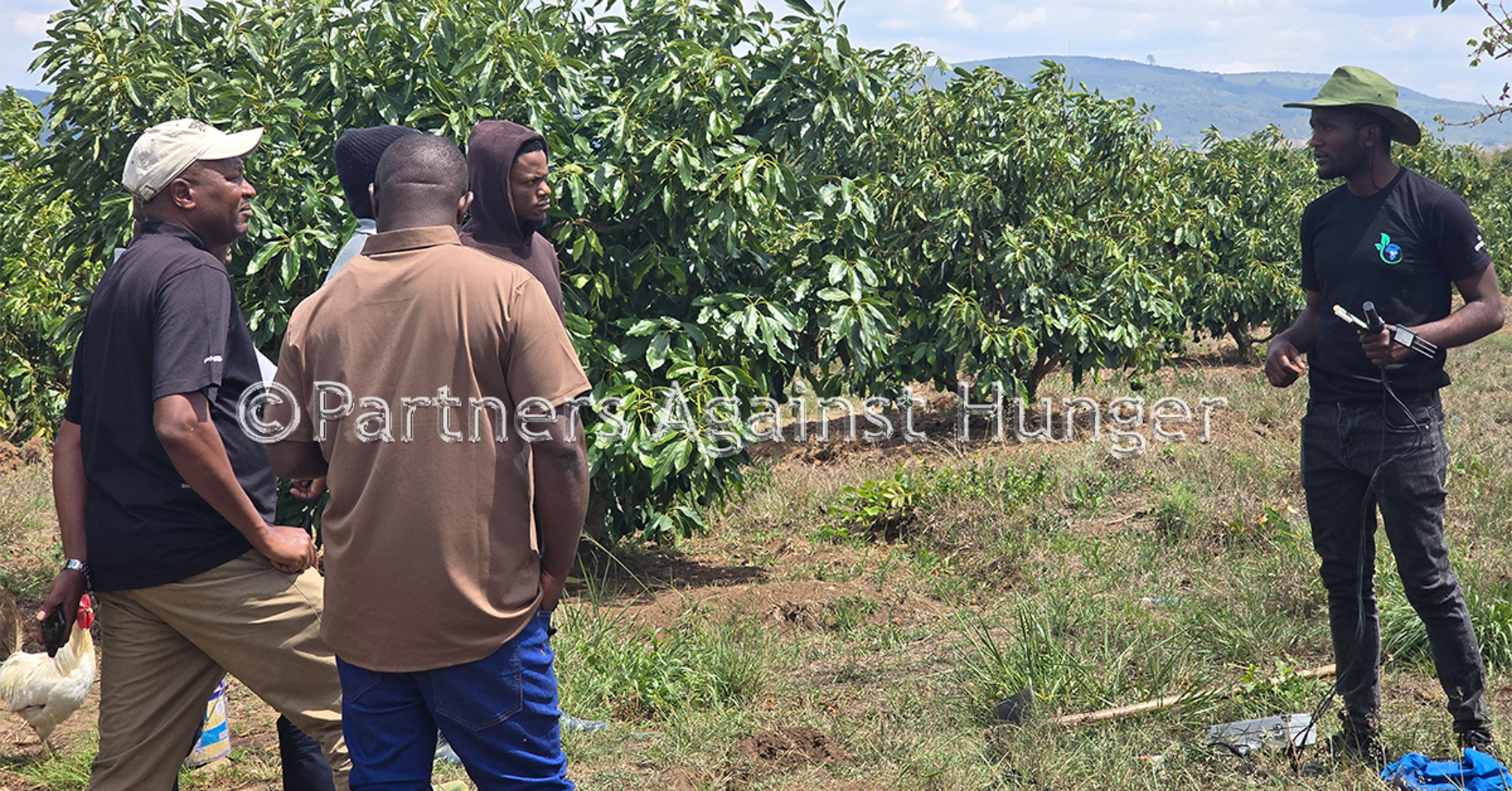
CAFAESUP Project Advancing Carbon Farming for Agricultural and Environmental Sustainability
Climate change continues to threaten food systems, ecosystems, and livelihoods across the world. Rising temperatures, erratic rainfall patterns, and environmental degradation are placing enormous pressure on agricultural production and rural communities. At the same time, agriculture-related activities contribute significantly to global carbon emissions, making the sector both vulnerable to climate change and central to the solution.
The Carbon Farming for Agricultural and Environmental Sustainability and Profitability (CAFAESUP) Project is responding to this challenge by promoting sustainable agricultural practices that help reduce carbon emissions while improving productivity, resilience, and profitability for farmers.
Implemented by FSPN Africa with support from the Munich Re Foundation and the Global Resilience Partnership, the initiative is transforming agriculture into a climate-smart and environmentally sustainable sector through carbon farming approaches and capacity development.
Why Carbon Farming Matters
Human activities account for a significant percentage of global carbon dioxide emissions, and agriculture-related activities contribute substantially to this environmental burden. Human-related activities account for nearly (90%) of all carbon dioxide emissions, largely driven by fossil fuel combustion for energy and transport. When considering all greenhouse gases across the entire food supply chain, agriculture and agrifood systems contribute roughly (30%) to (35%) of total global emissions. Unsustainable farming practices, land degradation, and emissions from agricultural systems continue to accelerate climate change impacts.
Carbon farming offers a practical and sustainable solution by enabling farmers and agricultural stakeholders to capture and store carbon dioxide in soils and vegetation. Healthy soils act as natural carbon sinks, helping remove excess carbon from the atmosphere while improving soil fertility, water retention, and crop productivity.
Through carbon farming, you can contribute to climate action while strengthening food production systems and creating long-term environmental benefits.
Promoting Carbon Capture and Storage
One of the key focus areas of the CAFAESUP Project is carbon capture and storage in agricultural landscapes. The project supports farming approaches that enhance the ability of soils and plants to absorb and retain carbon dioxide naturally.
By encouraging sustainable land management practices, the initiative helps:
- Improve soil health and fertility
- Increase agricultural productivity
- Reduce environmental degradation
- Enhance climate resilience in farming communities
- Support long-term sustainability of food systems
The project demonstrates that agriculture can move beyond being a contributor to emissions and become an important driver of climate solutions.
Building Capacity for Climate-Smart Agriculture
Knowledge and skills are essential for sustainable transformation. The CAFAESUP Project places strong emphasis on capacity building to ensure that farmers, agricultural stakeholders, and communities understand how to manage, reduce, and offset carbon emissions effectively.
Through training sessions, awareness programs, and knowledge-sharing activities, participants gain practical understanding of:
- Climate-smart agricultural practices
- Sustainable soil management
- Carbon reduction and offsetting strategies
- Environmental conservation approaches
- Resilient farming techniques
By equipping stakeholders with the right skills and information, the project empowers communities to adopt sustainable solutions that benefit both people and the environment.
Supporting Environmental Sustainability and Profitability
Sustainability and profitability can go hand in hand. The CAFAESUP Project promotes agricultural practices that not only protect the environment but also create economic opportunities for farmers and communities.
When you adopt sustainable farming approaches, you improve resource efficiency, strengthen productivity, and reduce vulnerability to climate-related risks. Carbon farming practices can also support long-term agricultural profitability by improving soil quality and enhancing resilience against changing weather conditions.
The project therefore contributes to:
- Sustainable food production
- Increased resilience to climate change
- Improved livelihoods for farming communities
- Reduced environmental impact
- Enhanced ecosystem restoration
Strengthening Climate Resilience Through Partnerships
The CAFAESUP Project highlights the importance of collaboration in addressing climate and agricultural challenges. Through partnerships with local communities, institutions, and global organizations, the project creates opportunities for shared learning, innovation, and collective climate action.
As climate challenges continue to grow, initiatives like CAFAESUP demonstrate how sustainable agriculture, environmental stewardship, and community empowerment can work together to build resilient food systems for the future.
Join the Movement for Sustainable Agriculture
Climate action starts with knowledge, collaboration, and sustainable practices. The CAFAESUP Project invites farmers, agricultural stakeholders, policymakers, and communities to become part of the movement toward environmentally sustainable and climate-resilient agriculture.
By supporting carbon farming and sustainable land management, you contribute to healthier ecosystems, stronger food systems, and a more sustainable future for generations to come.
🔗 Learn more about the project: https://fspnafrica.org/cafaesup/
For more information, contact info@fspnafrica.org